
Technical Articles
How to Cross-Reference D38999 Connectors and M85049 Backshells Safely
2026-08-04T15:24:00.000Z
CROSS-REFERENCE AND ALTERNATIVE SOURCING
CROSS-REFERENCE AND ALTERNATIVE SOURCING
A safe D38999 or M85049 cross-reference is a documented matching process, not a visual comparison. The reviewer must confirm the complete designation, mechanical interfaces, cable requirements, materials, finish and validation plan before recommending an alternative.
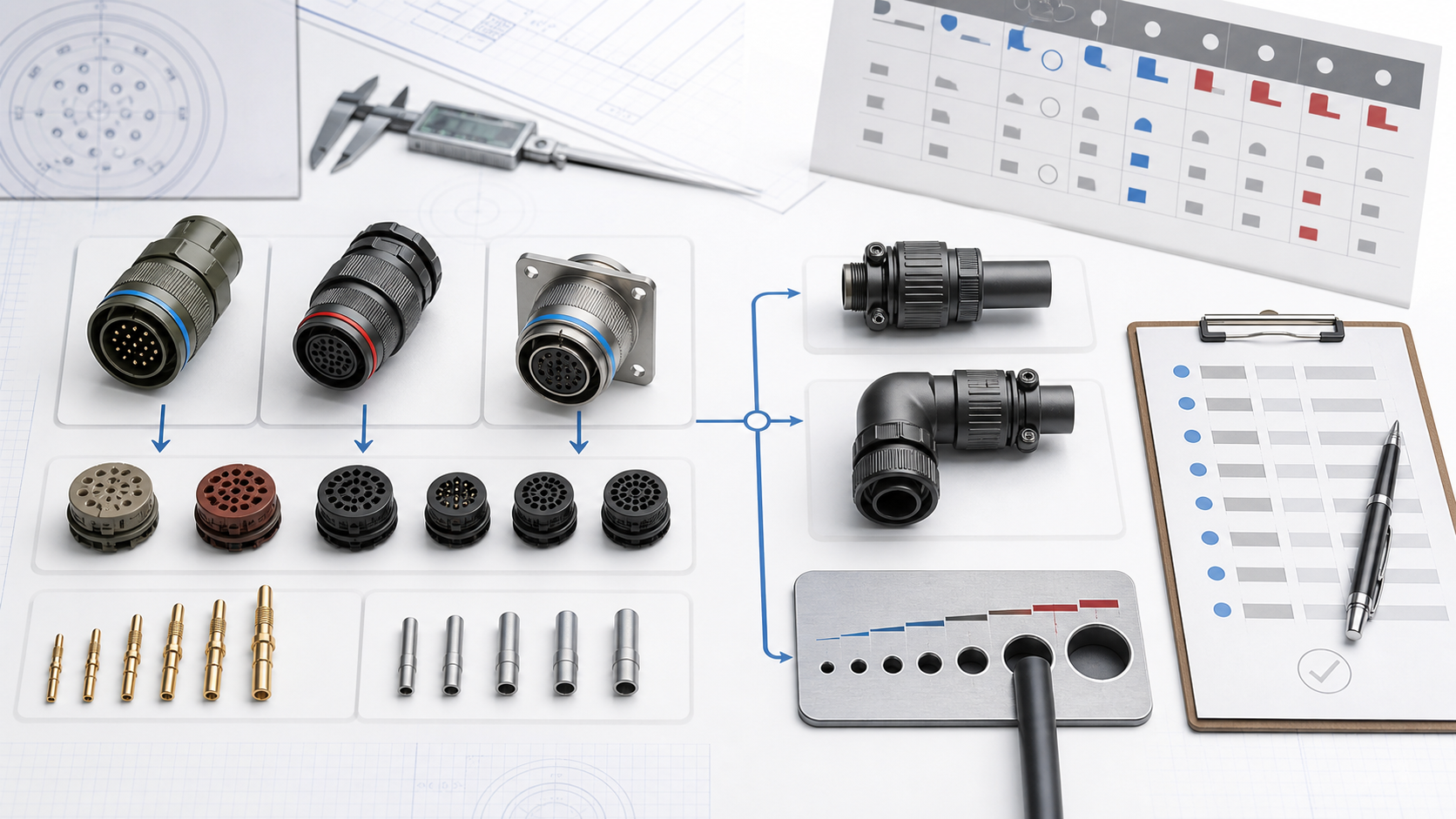
Conceptual selection workflow showing connector, insert, contact, backshell and cable decisions.
What does cross-reference mean?
In connector sourcing, cross-reference means comparing a requested part with a candidate source against defined requirements. It may support an original-brand equivalent, a compatible alternative for customer evaluation or a custom option made to an approved drawing. Those routes should never be blended into one claim.
Genuine original: authenticity and manufacturer traceability must be verified.
Compatible alternative: interfaces and application requirements are compared, then the customer validates the selected option.
Custom product: the item is made against a confirmed drawing, sample or technical requirement.
A similar appearance is not enough. Circular connectors can look alike while differing in coupling, keying, insert arrangement, contacts, material, finish or environmental class.
The minimum review sequence
Identify the governing family and exact full part number without filling in missing characters.
Confirm plug or receptacle style and the panel- or cable-side mounting arrangement.
Check shell size, insert arrangement, pin/socket configuration and polarization.
Review material, finish, service class and environmental requirements from approved documentation.
Confirm the mating half and the connector rear interface.
Match the M85049 or AS85049 style backshell by interface, cable exit, cable diameter, shield termination and strain relief.
Define the sample, inspection and application-validation plan before volume ordering.
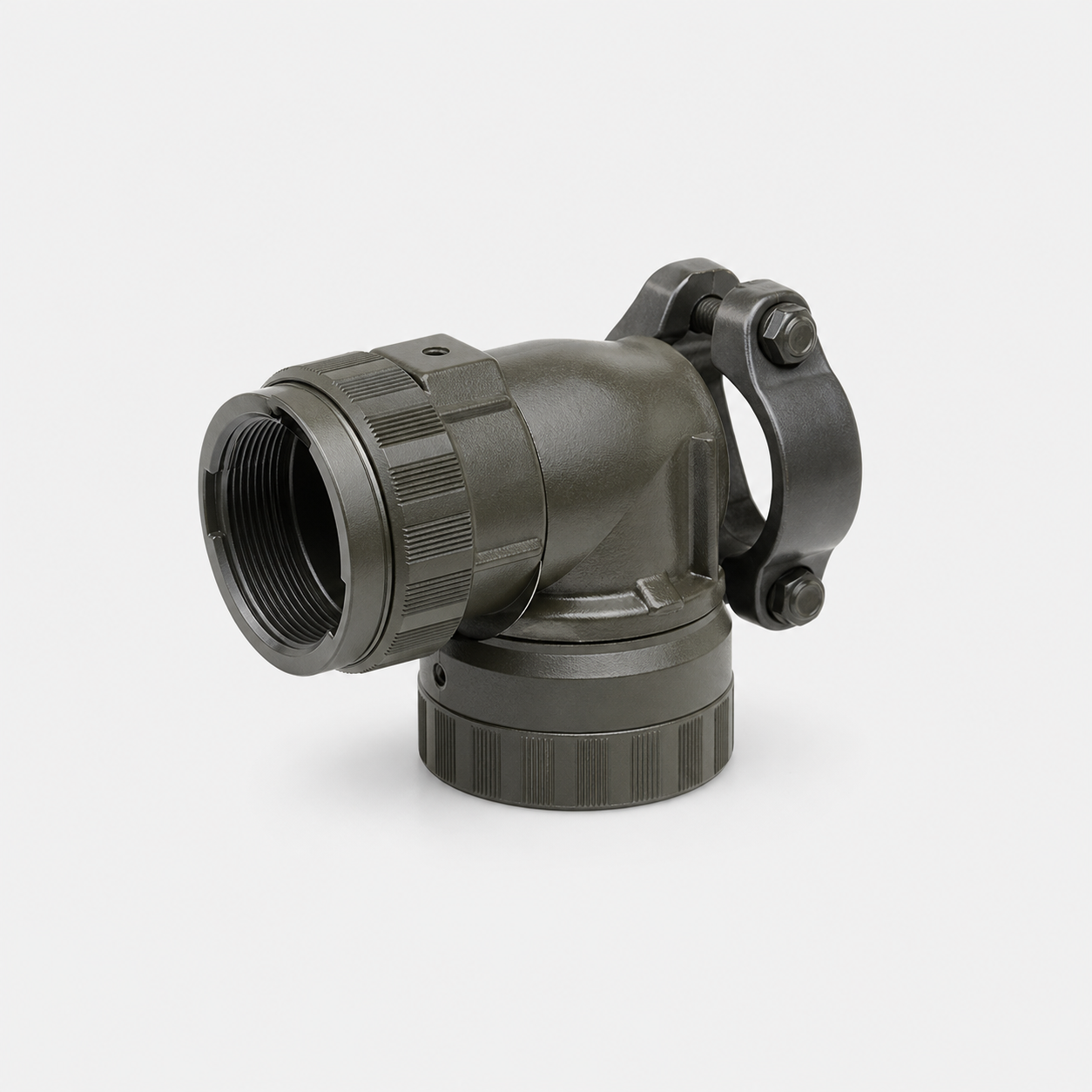
Generic right-angle backshell sourcing illustration; final interface and performance require supplier documentation.
Why cable information matters
A backshell is part of the harness mechanical system. The finished cable-bundle diameter, braid or shield construction, bend radius, boot transition and available installation space can determine whether a straight or angled rear accessory is practical. A part that attaches to the connector may still fail the harness-layout requirement.
How to evaluate a compatible alternative
Build a comparison around the requirements that matter to the application. These may include interface dimensions, contact configuration, materials, plating or finish, sealing, temperature, vibration, shielding, documentation and approved testing. Do not assume identical performance because two items mate or share a naming pattern.
Request the candidate supplier drawing and record any deviation from the reference.
Separate verified values from items that remain to be tested or documented.
Use a sample or first-article review when the application risk justifies it.
Keep the customer’s acceptance criteria and change-control requirements visible.
Frequently asked questions
Can a partial D38999 number be completed from a similar item?
No. Missing code positions should be recovered from the drawing, equipment record, mating connector or original documentation. Guessing a code can change the configuration.
Is M85049 the same as SAE AS85049?
The naming is commonly encountered in the same rear-accessory standards lineage, but procurement should use the designation and revision required by the approved documentation. The exact item still needs part-number and drawing review.
Does cross-reference approval come from the supplier?
The supplier can provide comparison information and samples. Final application approval belongs to the customer’s engineering, quality or compliance process.
Send a cross-reference package
For a focused review, send Tradin Connect the complete reference part number, candidate drawing if available, mating connector, cable data, quantity, application constraints and required documentation.